I. Increasing Complexity in Multi-Voltage Designs
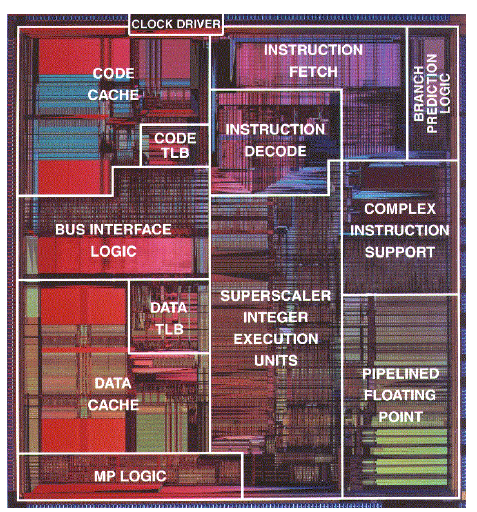
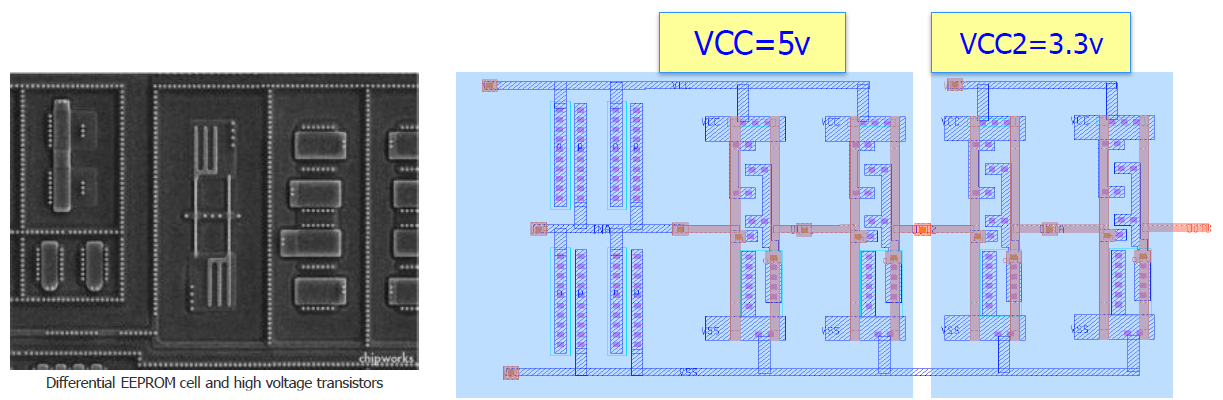
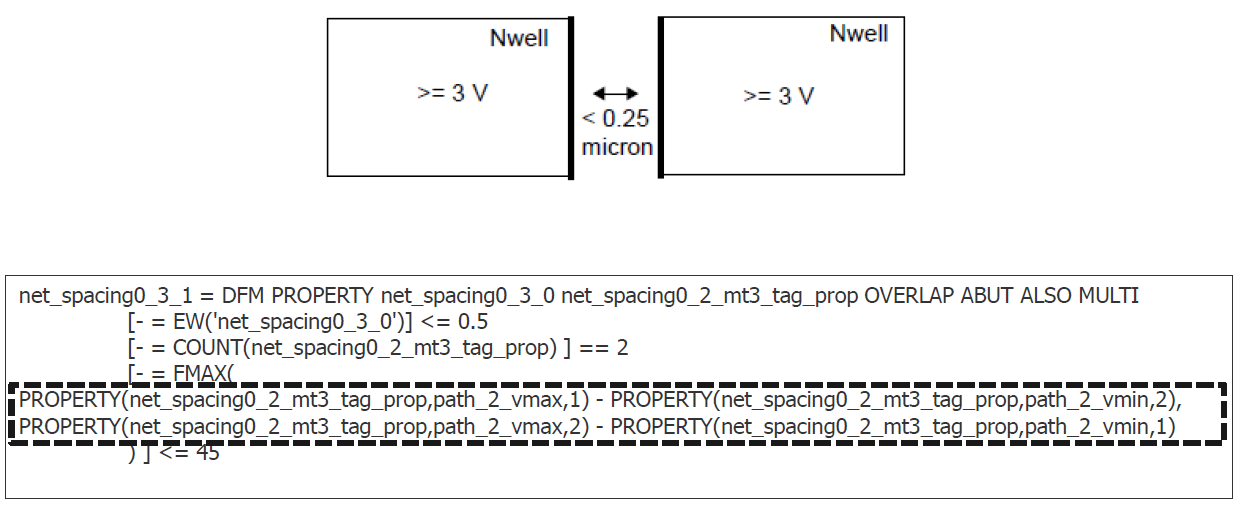
Modern dies contain multiple voltage domains. Voltage differences (ΔV)
between regions introduce spacing challenges and dielectric stress concerns.
II. Voltage-Aware Spacing Requirements
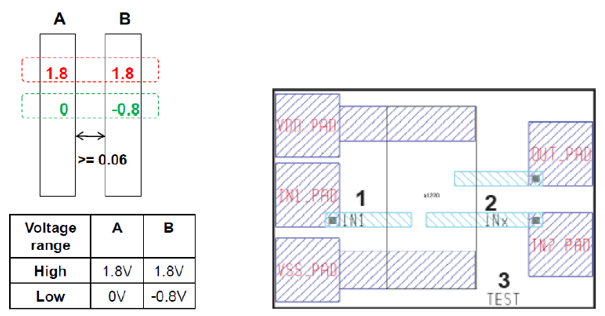
Spacing rules must vary depending on voltage combinations:
5V ↔ 5V
3.3V ↔ 3.3V
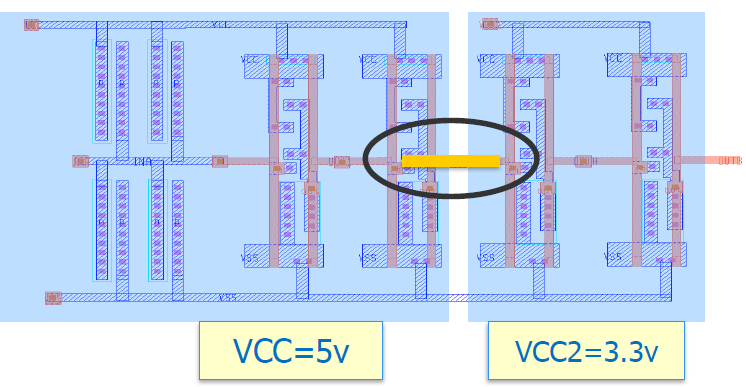
3.3V ↔ 5V
Greater ΔV requires larger spacing to prevent breakdown.
III. Limitations of Marker Layer Methodology
Traditional approaches relied on marker layers to isolate voltage regions.
However, advanced nodes introduce:
• More voltage domains
• Cross-domain routing
• Increased rule complexity
• Human-error risk
IV. Text-Based Voltage Annotation
Voltage annotations enable deterministic checking by assigning
voltage properties directly to nets.
Advantages:
• Reduced dependency on CAD marker layers
• Improved reliability
• Better automation
V. Deterministic Voltage-Aware DRC Flow
Voltage propagation and spacing verification are integrated
into connectivity-aware checking.
Voltage-aware DRC provides deterministic, scalable, and
reliability-driven spacing verification for multi-domain designs.
As nodes scale and power domains multiply, voltage-based rule
evaluation becomes mandatory for robust sign-off.